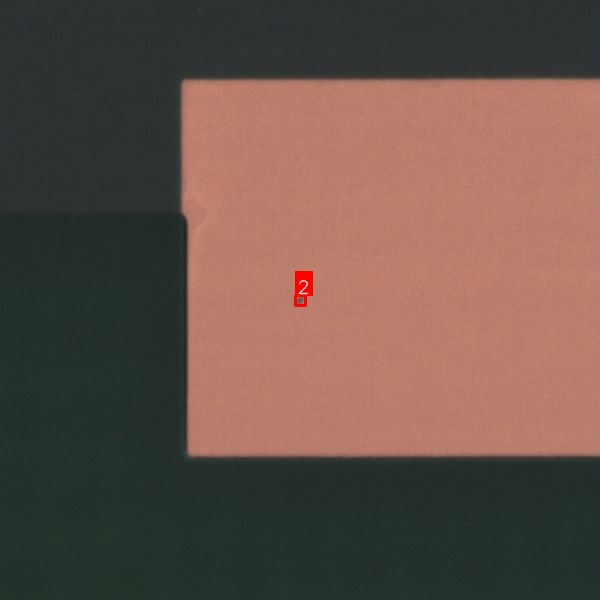
I currently have a PCB defect detection dataset. After training with YOLOv11, I found that the detection performance for scratches and foreign objects is not good. Specifically, in the confusion matrix, I noticed that these two categories are particularly likely to be recognized as background, with almost 50% being misidentified as background. I personally think this may be because scratches are faint and shallow on the surface, and foreign objects are very small, making it easy for both to be misclassified as background. I have provided three example images: the first two are examples of scratches, and the third is an example of a foreign object. I would like to know what methods can improve the differentiation from the background, or in this situation, do you have any good suggestions?


How much data do you have?
Out of 10,000 images, these two types of defects currently have the worst recognition performance.
You can try SAHI
Thank you for your suggestion, but I found that SAHI is more focused on the inference stage. What I want to optimize is the model’s performance—how can it perform better during the training stage? Do you have any suggestions?
You should also train on tiled images similar to SAHI